Childcare spaces seldom really feel tranquil for long. A bump on the play area, a kid that chokes on a grape, a teacher that suddenly really feels pale before twenty preschoolers. If you have operated in very early discovering for any type of size of time, you understand just how rapidly a routine morning can turn into a genuine emergency.
That is where well developed express childcare first aid courses make their location. Not as a "tick package" need, yet as the backbone of just how a service safeguards children and supports educators.
I have actually trained and examined thousands of early childhood years teachers in first aid and CPR courses throughout the years. What separates a valuable fast first aid course from a featureless one is not just the schedule, yet exactly how well it mirrors the speed, pressure, and unpredictability of genuine childcare environments.
This short article considers what express child care first aid training can and can refrain from doing, exactly how to pick the right option for your solution, and just how to stabilize rate with real competency.
Why early knowing facilities require a various type of first aid training
First aid in a stockroom or corporate office is extremely various from first aid in an infant room.
Children can not always explain what they feel. They wear away faster with breathing problems and allergic reactions. Their composition is smaller, more delicate, and modifications swiftly from infancy to school-age child. On top of that, teachers operate in ratios, managing numerous youngsters simultaneously. You can not merely "tip away" for ten minutes to run a full analysis in peace.
In method, this suggests first aid and CPR training for educators should be:
- specific to pediatric physiology and youngster development realistic about ratios, room layouts, and outdoor play spaces aligned with regulative needs for very early understanding solutions achievable within the timeframes and lineups of a hectic center
Express child care first aid courses intend to satisfy this last point without shedding the very first three. They press call hours, get rid of padding, and utilize blended layouts such as online pre‑learning combined with short, extensive functional sessions.
When made well, express first aid training values both your time and your responsibilities.
What "express" really indicates in first aid and CPR training
The word "express" can be misleading. Some people think of a 90‑minute seminar that magically changes a full first aid course. That is not how reputable training works.
In most jurisdictions, industry‑standard first aid and CPR courses are specified by established learning end results and assessment criteria. A reputable express first aid course or express cpr course does not get rid of those results. Rather it alters the way you reach them.
Typically, an express first aid course for child care employees will certainly:
Shift concept into self‑paced on the internet components Use pre‑course tests to focus the classroom time on useful abilities Run a fast first aid training session that is extremely hands‑on, commonly 3 to 5 hours rather than a complete day Assess capability with scenario‑based tasks that mirror child care occurrencesFrom a participant's viewpoint, the classroom element feels much shorter and extra focused. From a conformity point of view, the same first aid certificate is issued, provided all needs are met.
If a supplier markets express first aid courses or fast cpr courses with unrealistically brief times and no purposeful evaluation, that is a warning. The clock should not be the only metric.
The childcare facts that shape course content
Every time I make or upgrade a first aid and cpr course for early knowing solutions, I start with real case records and near misses. Certain patterns repeat.
Choking, allergies, falls from play equipment, seizures, asthma first aid Morphett Vale flares, and play ground crashes are common. So are much less remarkable yet still vital events like high fevers, small head knocks that might hide a concussion, or a youngster discovered with an unknown pill in their hand.

An effective express child care first aid course recognizes these realities. Beyond generic fap first aid content, it needs to:
Provide age‑specific CPR training
Cardiac arrest in children is often additional to breathing problems. Executing cpr on an infant requires different hand placement, compression depth, and ventilation proportions than on an older child or grownup. Educators require to really feel the difference, not just review it.Address choking with practical drills
Numerous childcare cases involve food, tiny toys, or craft things. A top quality fast first aid course will have you exercise back strikes and upper body or stomach drives on pediatric mannequins, not just "speak through" the steps.Focus on anaphylaxis and asthma
Peanut allergies, egg allergies, insect attacks, and asthma are part of daily life in very early discovering. Staff should be well-versed in using auto‑injectors, inhalers with spacers, and created activity plans. In my experience, running repeated, timed drills builds this fluency better than lectures.Include head injury decision‑making
Children drop. Educators must know when a head bump is securely kept track of with parents educated, and when to call a rescue. Express first aid training should cover warning signs and symptoms, monitoring periods, and documentation.Simulate supervision constraints
Real childcare first aid commonly happens while other children exist and active. Courses that simulate this pressure, reasonably, produce more transfer of learning to the office. Peaceful, unrealistic circumstances on empty floors do not.When you assess express childcare first aid courses, look much less at the brochure phrasing and even more at the scenarios. Ask on your own whether they resemble your rooms, your playground, your excursion setups.
Blended understanding and how to make it help educators
Most express first aid and cpr courses for childcare rely upon mixed delivery. Below is the common pattern: theory online, sensible face‑to‑face.
From a fitness instructor's point of view, this version works when educators in fact finish the pre‑learning. When they do not, the express part comes to be a problem rather than a benefit.
Services that obtain the most effective value from express cpr training and fast first aid courses do three points right.
They routine shielded pre‑learning time
Anticipating teachers to work through online components at home, unsettled and tired, hardly ever goes well. Centers that designate a silent hour on the roster for online first aid training, or supply alleviation team so individuals can tip away, see a lot higher completion rates and better course engagement.They use internal champions
A teacher who enjoys knowing, or a room leader that sees the useful value of fast first aid training, can gently chase coworkers, solution fundamental technology inquiries, and flag concerns early. This assistance is typically a lot more efficient than numerous tip e-mails from an outside provider.They link the concept to their own policies
Online first aid and cpr courses generally show generic principles. A chosen supervisor that takes a seat with the group and claims, "Let us match what you simply discovered to our very own emergency plan and medicine types" bridges that space. A 20‑minute interior debrief after an express first aid course can strengthen abilities greater than another hour of slides.Blended understanding is not a faster way. It is a redistribution of effort. When you take care of that effort, you protect both your educators' time and your solution's safety.
Fast vs extensive: discovering the best balance
I usually get asked for the fastest feasible first aid and cpr training classes, especially when a facility becomes aware several certificates will end. The stress is actual. Ratios still need to be covered, moms and dads still anticipate open doors at 7:30 am, and no person has extra staff.

The inquiry to ask is not "What is the fastest first aid course near me?" however "What is the shortest course that still leaves my teachers certain and experienced?"
A qualified express child care first aid course acknowledges that rate has limitations. Here are the trade‑offs I have seen in practice.
Shorter does not constantly suggest cheaper
Fast certification can reduce pause the flooring, which saves cash. However if the course is so small that individuals leave confused, you end up paying a lot more in supervision, event evaluations, and re‑training. Truth price is not the billing, it is the residual risk.Confidence is as essential as competence
You can pass an official assessment on CPR techniques and still hesitate in a genuine emergency. Courses that rush assessment without rep and coaching usually generate "paper all set" staff that do not really feel prepared in their bones.Refresher regularity matters
An express cpr correspondence course taken each year can preserve skills far better than a full first aid and cpr course done as soon as every 3 years. Muscle mass memory discolors. Express layouts make it simpler to take another look at essential skills more often, particularly CPR and choking response.Regulators established minimums, not best practice
Your regional laws could only need one personnel with a present first aid certificate on website in all times. That is not the like best technique. In a multi space service, a solitary qualified individual is rarely enough. Express first aid courses make it more sensible to educate a bigger proportion of your team without overwhelming your roster.When evaluating providers, try to find those who are sincere concerning these trade‑offs and happy to state, "No, we can not sensibly compress that content any kind of additionally."
What an excellent quality express childcare first aid course must include
Every service provider creates their very own program, but certain aspects are non‑negotiable if you desire both conformity and real life capability. A robust express childcare first aid course generally covers:
Primary evaluation and requiring help
Educators require a fast, reputable pattern for examining risk, response, respiratory tract, breathing, circulation, and for turning on emergency situation solutions. This becomes the foundation for every scenario.Child and baby CPR
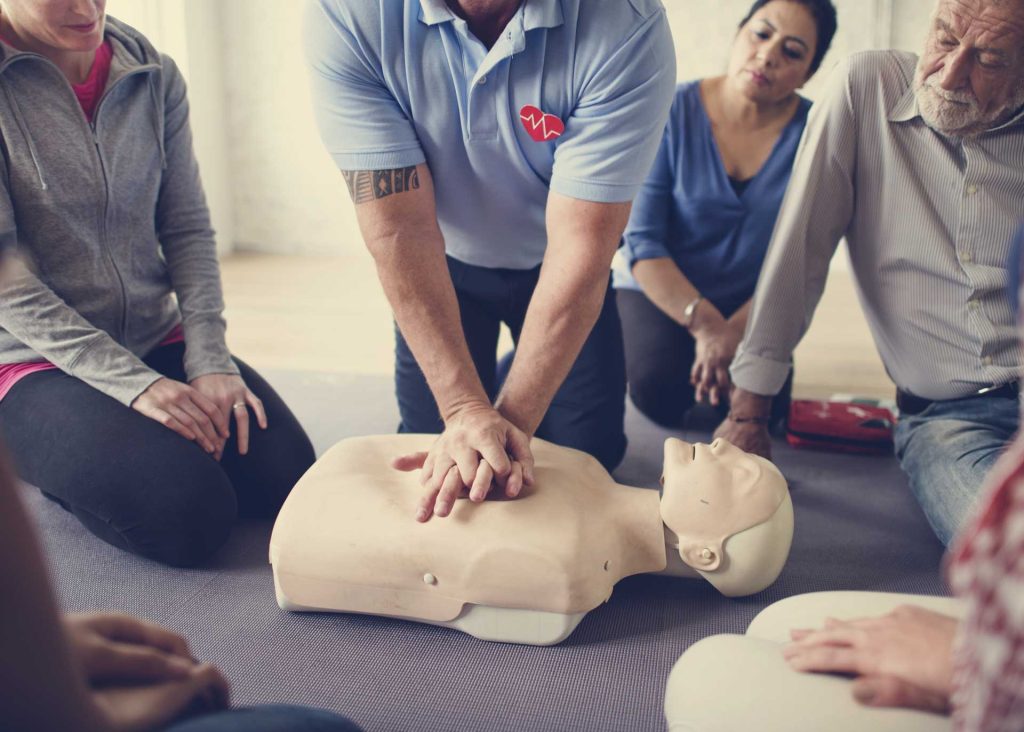
This consists of compressions, breaths, utilizing AEDs securely with pediatric pads, and handling solitary rescuer versus team reaction in a childcare context. Quality cpr training provides participants enough practice to get to a constant rhythm under mild time pressure.Choking and respiratory tract obstruction
Both partial and complete blockage, with age ideal techniques. Good courses have individuals move swiftly between mannequins of different dimensions to mimic combined age groups.Breathing troubles and asthma
Acknowledging early breathing distress, utilizing flatterers and spacers, placing youngsters safely, and intensifying according to asthma action plans.Anaphylaxis management
Recognising signs and symptoms early, using auto‑injectors properly, understanding second dose timing, and rehearsing whole‑service responses like calling ambulance, alerting households, and monitoring other children.Bleeding, fractures, and soft cells injuries
Particularly those arising from play area cases or indoor falls. Educators do not need paramedic level detail, however they do require functional bandaging abilities and decision‑making criteria.Head injuries and seizures
Consisting of when to call a rescue, exactly how to secure the kid throughout a seizure, and exactly how to document and hand over to parents and health and wellness professionals.Common CPR first aid hands-on training youth health problems and fever
Record maintaining and communication
Most events create documentation. Express childcare first aid training should integrate occurrence kinds right into scenarios so teachers practice documenting clearly while the memory is fresh, not 2 hours later.If a carrier's "express first aid course" for child care leaves out core pediatric CPR, choking, or anaphylaxis situations, beware. Speed should never ever change the foundations.
Choosing an express first aid company for your center
From the outdoors, first aid courses can look extremely similar. Every person checklists CPR, hemorrhaging control, and certifications. The differences depend on shipment style, trainer experience, and how much they understand early learning.
When I support facilities in picking express first aid training, I suggest they ask a short, concentrated set of questions.
- Do your fitness instructors have straight experience with very early discovering or college settings? How do you adjust circumstances to our rooms, outdoor locations, and trips? Can you deliver express childcare first aid courses on site prior to or after hours, or on weekend breaks? What proportion of your express first aid and cpr course is hands‑on as opposed to slides? How do you handle educators with language, literacy, or physical restrictions?
You can tell a lot from just how a carrier answers these. Obscure solutions or inflexibility usually forecast a "generic" experience that may not land well with your team.
For solutions spread out throughout a number of websites, seek express first aid courses that can standardise material throughout areas while still adjusting situations to neighborhood layouts. This builds a shared language for emergency situations, which truly matters when educators relocate in between rooms or centers.
Making one of the most of on site express courses
One of the greatest fads in the last few years has been relocating away from sending out individual staff to public first aid courses, and towards express childcare first aid training provided on site.
When succeeded, this is extra inexpensive, much less turbulent, and extra pertinent. When hurried, it can seem like a tick box exercise. A couple of functional suggestions from facilities that do this successfully:
Prepare your environment
Have a clean, open location for CPR practice, along with accessibility to your play area or typical excursion tools. Fitness instructors can then construct scenarios that include climbing frames, entrances, sandpits, and strollers, not simply floor coverings on the floor.Use your real forms and policies
Ask the trainer to integrate your case kinds, medicine charts, and emergency plans. Educators then exercise with the tools they will really use on Monday early morning, rather than common templates.Encourage entire team participation
Even educators not currently due for first aid recertification can participate in components of the express first aid course as observers or individuals without analysis. This constructs a shared culture of feedback, especially around duties and communication.Schedule with realism
Early morning or late mid-day sessions can work, however not if teachers have currently done ten hours on the floor. Take into consideration splitting right into 2 much shorter express first aid sessions, or turning personnel through throughout a couple of days, instead of pressing every person right into one marathon.On website express cpr courses and fast first aid training can change how a team thinks about emergency https://landenclwy168.wpsuo.com/fast-first-aid-cpr-refresher-when-and-why-you-ought-to-renew situations. People see each other perform under light stress, find out each various other's staminas, and area gaps prior to a genuine event reveals them.
Keeping skills sharp in between courses
Even the best express childcare first aid course only lasts as long in the memory. Without refresher courses, skills degeneration, typically within months.
Centers that preserve solid first aid and cpr capability construct basic routines into their year.
Short, casual drills
A 5 min "CPR refresh" throughout a team conference, or a quick role‑play of a child with an asthma assault, aids muscular tissues and minds bear in mind. No certificates, just repetition.Review of real incidents
When a genuine occasion happens, debrief it constructively. What went well, what could we boost, did our express cpr training cover this scenario, and do our policies match what in fact occurred? Maintain this factual, not blaming.Visual cues
Clear, constant signage for emergency situation treatments, auto‑injector areas, and first aid packages enhances what was educated. Educators under anxiety look for straightforward prompts.Regular, shorter refreshers
Rather than waiting the full 3 years for another major first aid course, think about yearly express cpr refresher course sessions. These concentrate on compressions, breaths, choking, AED usage, and any kind of high threat conditions present amongst your enlisted children.Over time, this split approach turns first aid from a one‑day occasion into part of the day-to-day professional identification of your educators.
When a "fast first aid course near me" is not the most effective choice
There are moments when a very pressed, common fast first aid course is the wrong device for the job.
Opening a brand-new service with complicated medical needs
If you will welcome children with significant health plans, such as extreme epilepsy, complex heart problems, or high danger allergies, purchase customized first aid and cpr training classes instead of off the shelf express courses. The content ought to be secured to those certain risks and care plans.Recovering from a severe incident
After a major occasion, such as a near drowning or severe anaphylaxis, team may require more time, conversation, and circumstance wedding rehearsal than a conventional express first aid course offers. Building confidence and refining the psychological impact matters as long as ticking competencies.Supporting very new educators
Those fresh to the sector commonly benefit from a slightly longer, more supported first aid and cpr course the very first time, with express child care first aid training made use of for succeeding refreshers. First direct exposure collections their state of mind for many years to come.None of this implies you have to choose between fast first aid and top quality. It means you match the format to your team's experience, your service's risk profile, and the moment you are in.
Bringing it back to the children
At the heart of every express childcare first aid course is a very straightforward goal: when something goes wrong, the adults in the area react smoothly, properly, and quickly adequate to change the outcome.
I still keep in mind one teacher that had completed an express cpr course hesitantly, concerned she would certainly "freeze" if anything actual occurred. 4 months later, a kid at her solution started to choke on an item of apple. She acknowledged the indicators, acted within secs, supplied effective back impacts, and got rid of the blockage. By the time paramedics got here, the kid was crying loudly, pink, and breathing well. The parents embraced her with splits at pickup.
When we spoke after that, she stated, "I simply heard my fitness instructor's voice in my head. We had actually practiced that specific circumstance two times. My body understood what to do."
That is what you are purchasing when you purchase express child care first aid courses that appreciate both your time and your obligations. Not just a first aid certificate for the file, yet lived, exercised responses that safeguard the kids and colleagues you respect most.